
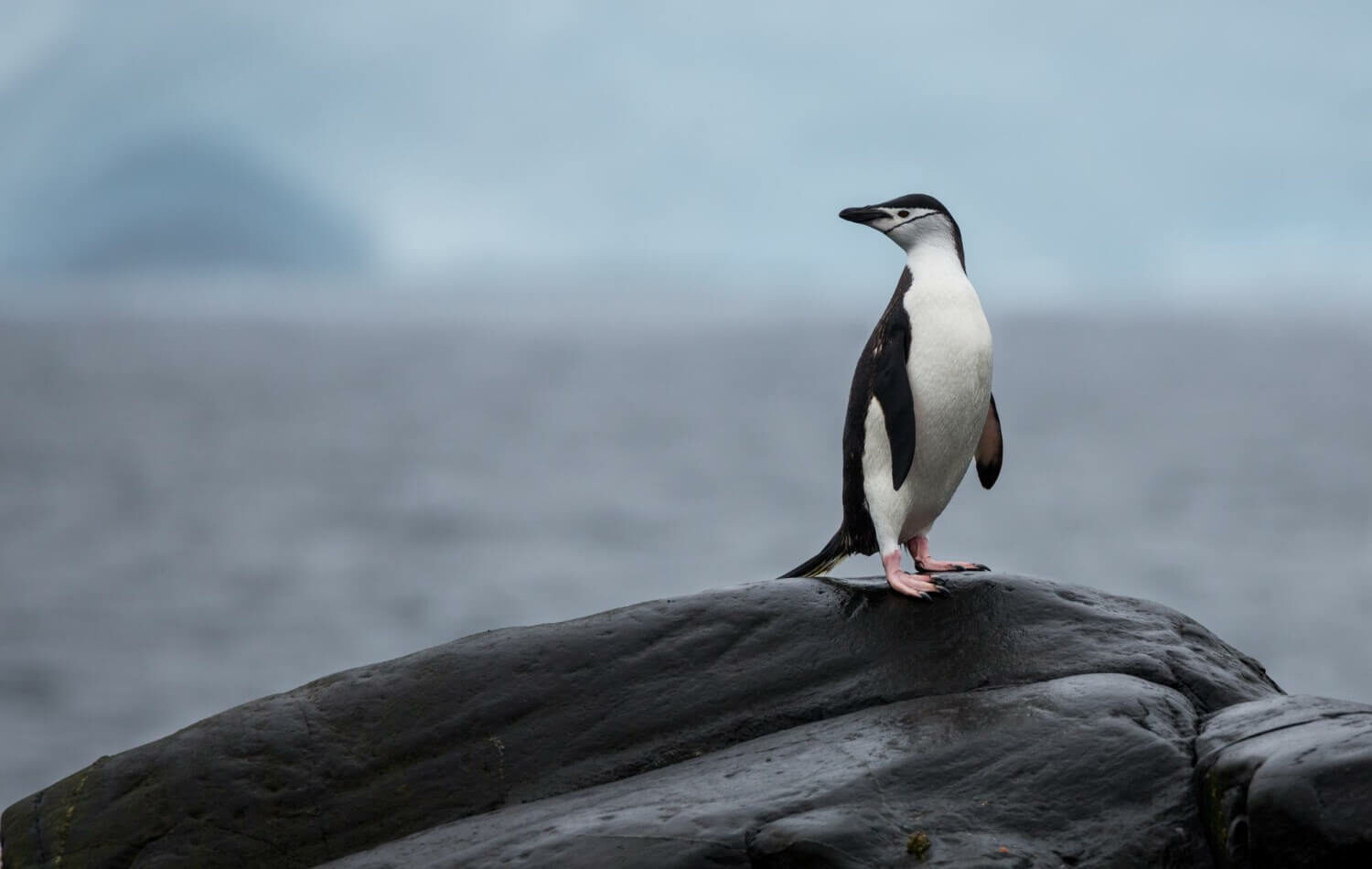
When the video of the lone penguin started circulating, most people reacted the same way. A pause. A small ache. A sense that something was wrong even before anyone explained it.
A single penguin, standing apart, staring toward the ocean while the rest of its colony moved on without it.
- No drama.
- No struggle.
- Just distance.
That image stuck with people because it felt familiar in a quiet way. We have all seen versions of it before. Not in nature documentaries, but in rooms full of people.
How a Single Slide Ends Up Isolated
I see this happen in pitch decks and presentations more often than founders realise.
Most slides move together. They share a tone. A pace. A logic. Then suddenly there is one slide that feels different. It is not bad. It is not broken. It just does not belong to the flow anymore.
The presenter keeps going, but the room hesitates. Attention drifts for a moment. The story breaks slightly, then tries to recover.
That slide becomes the lonely penguin.
It stands there, technically correct, but disconnected from the group it was supposed to move with.
Why This Happens Without Anyone Noticing
No one intentionally designs an isolated slide.
It happens when a slide is created in a different mindset. A last minute addition. A section built to answer a specific concern. A slide added because someone once asked for it.
On its own, the slide makes sense. But the deck is not experienced slide by slide. It is experienced as a movement. When one slide does not move at the same speed or direction, the audience feels it immediately.
They may not be able to articulate it, but they feel the separation.
The Audience Does Not Stop. They Just Move On
This is the part that matters.
When a penguin is separated from its colony, it does not make noise. It does not demand attention. It simply stands there while the group continues.
Slides behave the same way.
The audience does not stop the presentation. They do not interrupt to explain what feels off. They simply move on mentally. They wait for the deck to feel coherent again.
Once attention leaves, it rarely returns with the same intensity.
Presentation Design Is About Belonging
Good presentation design is not about making every slide impressive. It is about making every slide belong.
Belonging shows up in small ways. Consistent pacing. Predictable structure. Clear transitions. A sense that each slide knows why it exists and why it appears at that moment.
When a slide breaks that sense of belonging, it creates distance. Just enough to matter.
The audience does not reject the idea. They just stop carrying it with them.
How to Spot the Lonely Slide Before the Audience Does
There is a simple test I use.
Scroll through the deck without reading the content. Just feel the rhythm. Where does it slow down. Where does it suddenly feel heavier. Where do you instinctively pause longer than expected.
That pause is not accidental.
It is usually where a slide stopped moving with the rest of the story.
Bringing the Slide Back to the Colony
Fixing an isolated slide rarely means redesigning it.
More often, it means deciding one of three things.
- Either the slide needs to be simplified so it can move at the same pace.
- Or it needs to be moved to a different position where it makes sense.
- Or it needs to be removed entirely.
Not every slide needs saving. Some were never meant to be there.
When the story flows again, the audience feels relief. The deck regains momentum without anyone consciously noticing why.
What the Penguin Teaches Without Saying Anything
The lonely penguin went viral because it showed separation without explanation.
Presentations do the same thing. They reveal where clarity breaks, where alignment is lost, where something no longer belongs.
Good design is noticing that moment early and fixing it quietly.
Before the audience moves on without you.